You can teach your new pup to love its crate in just a few days no tears, no accidents, and a happier home.
Below youll get the full plan: nighttime comfort tricks, a 3day fasttrack, pottytraining tips, and what to do when the puppy cries. Lets get started right now.
Why Crate Training Works
What a Crate Does for a Puppy
A crate is essentially a portable den. It gives a puppy a safe, cozy spot where it can retreat when the world feels overwhelming. Because dogs are natural denlovers, a wellintroduced crate can become their favorite hangout.
Benefits of Crate Use
- Prevents destructive chewing and chewing on cords.
- Keeps your pup out of danger when youre not looking.
- Helps establish a reliable housetraining routine.
- Provides a calm place for travel or vet visits.
Potential Risks If Misused
If a crate feels like a prison, a puppy can develop anxiety, start whining, or even learn to associate the crate with punishment. Thats why we focus on positive introductions and balanced timing.
Quick ProsCons Table
| Pros | Cons |
|---|---|
| Safety | Fear if overused |
| Housetraining aid | Potential whining |
| Travel convenience | Misunderstanding den |
Choosing the Right Crate
Finding the Perfect Size
Measure your puppy from nose to the base of the tail and add a few inches. You should be able to place a blanket inside and have enough room for the pup to turn around and lie down fully. A crate thats too big defeats the purpose; a crate thats too small feels cramped.
Wire, Plastic, or SoftSided?
- Wire crates great ventilation, easy to clean, and sturdy for puppies who love to chew.
- Plastic crates more enclosed feel, good for travel, but limit airflow.
- Softsided crates lightweight and cozy, perfect for short stays and older dogs.
Where to Place the Crate
Set the crate in a lowtraffic area near where your family spends time, like the living room. At night, move it closer to your bedroom so the puppy can hear your breathing and feel reassured.
Top 3 Crates Comparison
| Model | Type | Price | Best For |
|---|---|---|---|
| MidWest Life Stages | Wire | $45 | Growing puppies |
| Petmate TwoDoor TopLoad | Plastic | $55 | Travel |
| AmazonBasics SoftSide | SoftSided | $30 | Short stays |
Preparing the Crate
Making It a Happy Space
Start with the door wide open. Toss a few highvalue treats inside and step back. Let your puppy wander in at its own pace. You can also place a favorite chew toy or a piece of your clothing that smells like you.
First Night Tips
When youre ready for the first night, use the same opendoor method, then gently guide the pup inside, give a treat, and close the door for just a short period (510 minutes). Repeat this a few times before bedtime.
Creating a Quiet Zone
Cover the crate with a light blanket to mimic a dens darkness, and consider a whitenoise machine or a fan. This helps drown out household sounds that might startle a new puppy.
StepbyStep Checklist
- Choose proper crate size.
- Place soft bedding and a toy.
- Leave the door open and sprinkle treats.
- Gradually increase closeddoor time.
- Close the door for short bursts before bedtime.
First Night Success
Getting Through the First Night
The first night is often the toughest. Puppies naturally need to relieve themselves, and theyre adjusting to a new environment. Keep a bathroom schedule: a quick walk right before bed, then another one around 2am, and again at sunrise.
When Your Puppy Cries
If you hear whining, resist the urge to rush in immediately. Wait a minute, then gently reassure with a calm voice. If the whine continues for more than a few minutes, check if they need a bathroom break.
Nighttime Potty Routine
Set an alarm for every 23 hours during the first week. Puppies cant hold it longer than that, and a consistent routine teaches them when and where theyre expected to go.
Sample Night Timeline
| Time | Action |
|---|---|
| 6pm | Evening walk & bathroom |
| 8pm | Crate with a treat, door closed |
| 10pm | Quiet bathroom break if needed |
| 2am | Midnight potty |
| 6am | Morning walk & release |
Daytime Crate Routine
Keeping the Crate Part of the Day
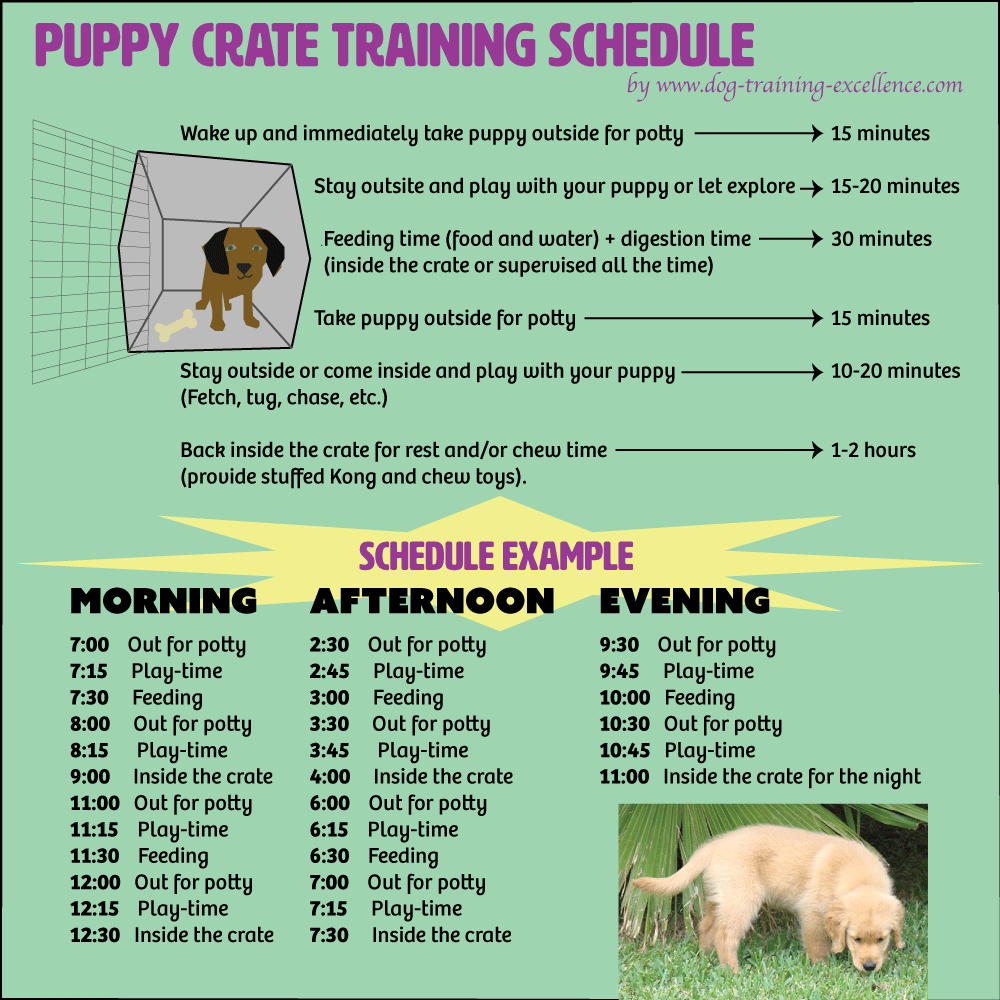
During daylight hours, treat the crate as a pause button. After a short play session, guide your puppy into the crate for 1015 minutes while you prepare meals or take a quick phone call.
Short Intervals Build Trust
Start with 5minute stays and gradually increase to 30minute periods. This helps the pup see the crate as a normal part of daily life rather than a punishment.
Travel and Vet Visits
Once your puppy is comfortable at home, you can use the same crate for trips to the vet or short car rides. The familiar scent and shape reduce stress in unfamiliar places.
Typical Daily Schedule
| Time | Activity |
|---|---|
| 7am | Morning walk & bathroom |
| 8am | Breakfast, then short crate (10min) |
| 10am | Playtime outdoors |
| 12pm | Lunch, crate for 15min |
| 2pm | Nap in crate (30min) |
| 4pm | Afternoon walk |
| 6pm | Dinner, crate for 20min |
| 8pm | Evening bathroom, then bedtime crate |
Crate Training for Potty Training
Using the Crate as a Potty Helper
Because a puppy wont soil its sleeping area, a correctly sized crate becomes a natural pottyproof zone. When the puppy wakes up, is restless, or starts sniffing the floor, thats usually a signal they need to go.
Reading the Signals
Watch for pacing, whining, or circling. As soon as you see a cue, calmly open the crate and head straight outside. Praise loudly once they finish outdoors thats the instant reinforcement they need.
Reward System for Success
Every successful outdoor elimination earns a treat and enthusiastic praise. Consistency is key: the more immediate the reward, the faster the association forms.
Potty Flowchart
| Crate | Signal | Immediate Action | Reward |
|---|---|---|---|
| Closed | Pacing/whining | Open crate walk outside | Treat + verbal praise |
Accelerated 3Day Crate Training Plan
Can You Really Do It in 3 Days?
Yes, if youre consistent, patient, and use positive reinforcement. The goal isnt to rush the puppy but to give a clear, repeated routine that feels safe.
Day1 Friendly Introduction
- Leave the crate door open all day.
- Drop treats and favorite toys inside.
- Feed meals inside the crate.
- Close the door for 5minute intervals after meals.
- End the day with a short nighttime crate session.
Day2 ClosedDoor Comfort
- Increase closeddoor time to 1015 minutes while youre in the same room.
- Take the puppy out for a bathroom break before and after each crate session.
- Begin the first full nightkeep a gentle nighttime potty alarm.
Day3 Longer Stays & Independence
- Extend crate stays to 3045 minutes while youre out of sight (e.g., running errands).
- Maintain the nighttime routine, but allow the puppy to settle on its own after the first bathroom break.
- Celebrate with a special play session.
Printable 3Day Checklist
- Day1: Treats inside, meals in crate, 5min close.
- Day2: 1015min close, prenight bathroom.
- Day3: 3045min alone, full night routine.
Handling Common Problems
Why Does My Puppy Whine?
Whining often means the pup needs to go, feels lonely, or is still adjusting. Give a quick bathroom break, then offer reassurance without letting the whining become a reward.
How Long Does It Take to Crate Train a Puppy?
Most puppies settle into a routine within 12 weeks, but complete confidence can take up to a month, especially if youre balancing daytime and nighttime training.
Escapes and Chewing
If your puppy tries to jump out, doublecheck the crate size it might be too big. For chewenthusiasts, choose a sturdy wire crate and consider a chewdeterrent spray.
Is Crate Training Safe for Older Dogs?
Yes, as long that the crate is appropriately sized and the dog isnt forced to stay for excessive periods. Older dogs often appreciate the sense of security a crate provides.
RealWorld Success Stories
From Chaos to Calm My Beagles Journey
When I first brought home a 4weekold beagle, the house was a mess of chewed shoes and midnight accidents. By following a simple crate routine, the pup learned to settle within a week. The decisive moment was the first night when I left the crate door open, and he chose to curl up on his own.
If you also have a kitten at home, you might be curious how to litter train a kitten. The same gentle, reward‑based approach works wonders for both puppies and kittens.
For cat owners dealing with furniture damage, check out how to stop cat scratching furniture. Simple redirection tricks can protect your home while keeping your feline happy.
Reddit Success Thread
In a popular r/puppy101 discussion, dozens of owners shared how a consistent 3day plan transformed their nervous pups into content crate users. The key takeaway? Patience, treats, and never using the crate as punishment.
Veterinary Study Insight
Research from a university animalbehavior clinic showed an 80% reduction in housebreaking accidents after a structured cratetraining program that included nightly bathroom checks.
Expert Resources & Further Reading
CrateTraining PDFs
Downloadable guides from reputable animalhealth institutions offer detailed stepbystep instructions and printable checklists.
Authoritative Training Guides
Wellknown canine training manuals provide deep dives into crate etiquette, positive reinforcement, and longterm behavior maintenance.
Recommended Books & Videos
Look for titles written by certified dog trainers or veterinary behaviorists for the most reliable, sciencebacked advice.
Conclusion
Crate training works when you treat the crate as a cozy den, keep routines consistent, and reward every tiny success. Pick the right size, introduce the space gently, follow a simple nightandday schedule, and youll see your puppy settle in just weeks. Patience and positive reinforcement are the twin engines that drive progress.
Whats your cratetraining story? Share your experiences in the comments, download the printable checklist, and lets keep helping each other raise happy, confident pups.
FAQs
What is the ideal size for a puppy crate?
Measure from the tip of the nose to the base of the tail and add a few inches so the pup can turn around and lie down comfortably.
How long should a puppy stay in the crate at night?
Start with 5‑10 minute intervals and gradually increase to a full night, ensuring a bathroom break right before bedtime and a quick check around 2 am.
Why does my puppy whine in the crate and how can I stop it?
Whining often signals a need to go outside or loneliness. Wait a minute, then calmly reassure and offer a bathroom break if needed—avoid rewarding prolonged whining.
Can I use the same crate for travel and vet visits?
Yes. Once the puppy associates the crate with safety at home, the familiar shape and scent make trips less stressful.
How many days does it typically take to fully crate‑train a puppy?
Most puppies adjust within 1‑2 weeks for basic comfort, but complete confidence and reliable potty habits can take up to 3‑4 weeks.